
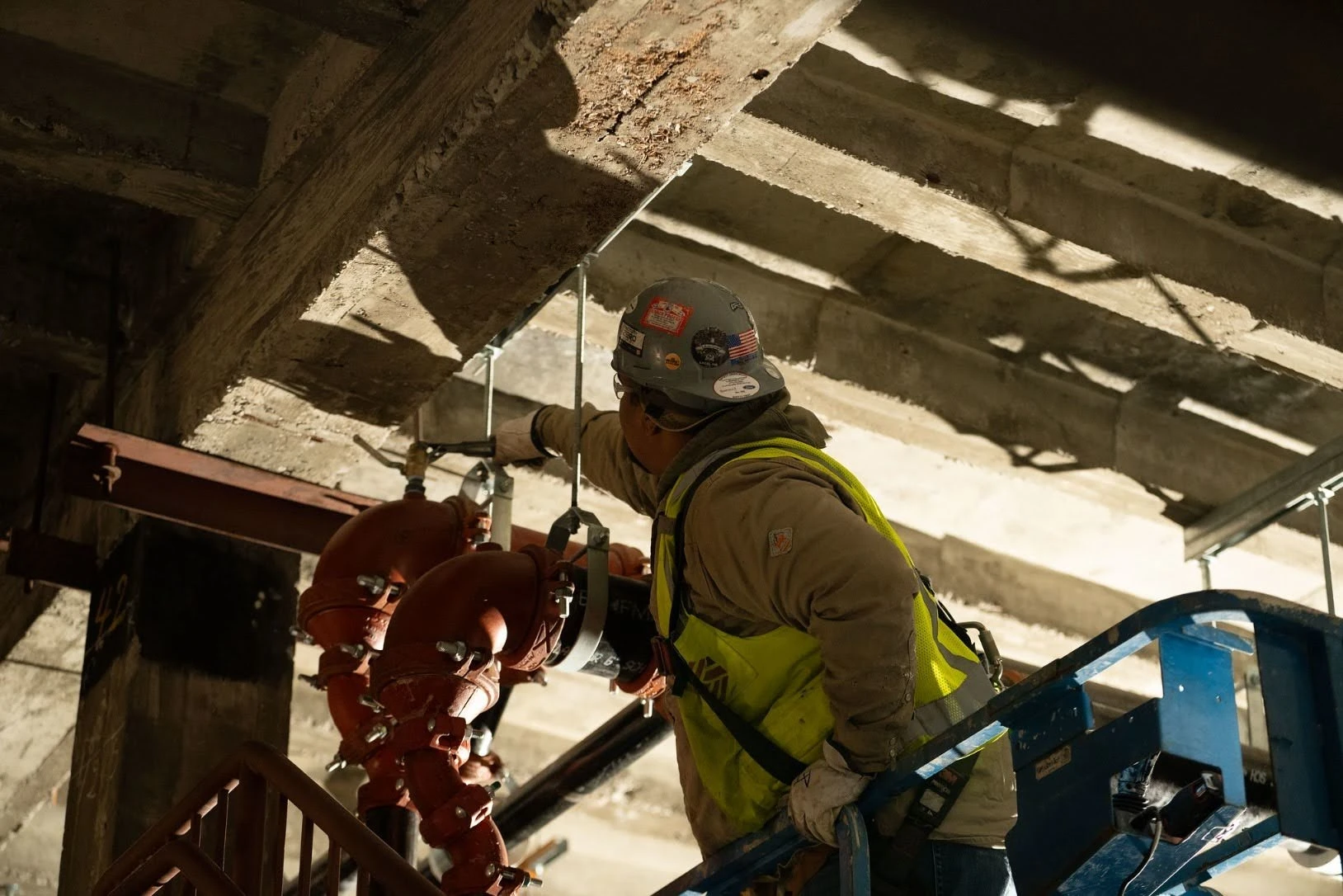
Industrial piping systems serve as the foundation of operations for commercial product and service providers across industries and specialties. Whether they are transporting petroleum, steam, gas, or any number of other materials, it’s important for piping systems to be designed, fabricated, and installed with safety and efficiency top of mind.
When undertaking a piping project in an industrial setting, project stakeholders must evaluate whether to have fabrication occur on-site (in both the construction of a new facility or renovation of an existing system) or to build the pipe systems off-site (prefabrication). While each project requires its own considerations, prefabrication can improve quality, reduce onsite congestion, and accelerate installation timelines in commercial settings. This guide breaks down the components, benefits, and considerations of prefabricating pipe systems and how pipe and steel industrial fabricators like Sylvan can deliver safe, consistent, and schedule-driven execution.
Key Takeaways
- Industrial pipe fabrication processes
- Benefits of prefabrication for improving time, cost, and quality outcomes
- Benefits of virtual design and construction (VDC) tools, such as CAD and BIM
- Guidelines and industry standards to consider
What is industrial pipe fabrication?
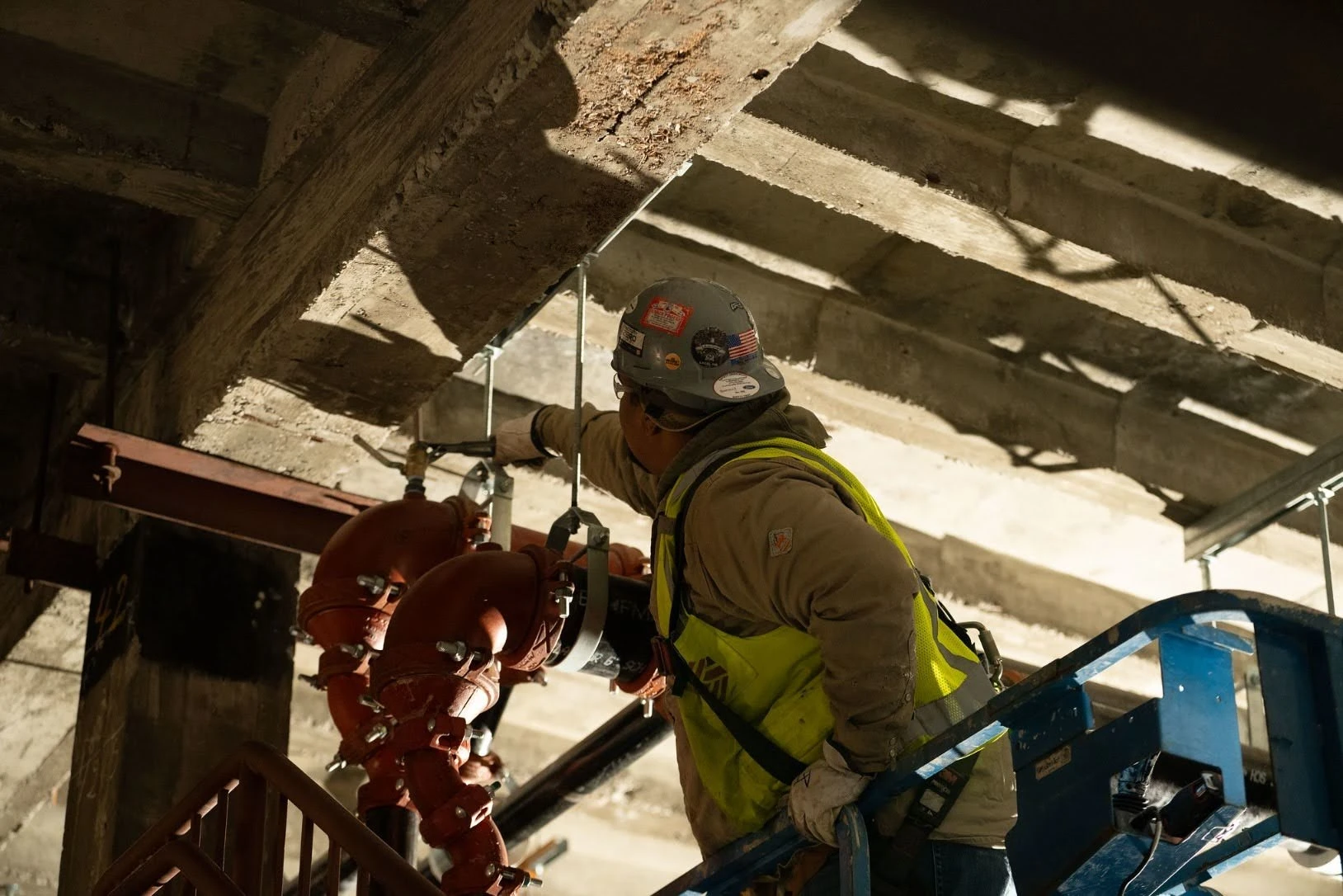
Pipe fabrication is the process of cutting, welding, and assembling components such as tubes, pipes, valves, fittings and flanges that form a system for transporting a material. Pipe systems are used in various industries to move raw liquid and gaseous materials like petroleum, chemicals, steam, and water through systems and processes. The material makeup of a system is chosen based on the product it’s transporting. Simple water can be transported by carbon steel, whereas a toxic chemical may require a more exotic material, such as an Inconel or a Hastelloy.
Traditionally, much of this work has been performed in the field. Today, prefabrication allows a significant portion of that work to be completed off-site.
How prefabrication improves time, cost, and quality outcomes
Prefabricating pipe systems consistently delivers measurable advantages over traditional field fabrication. The benefits extend across multiple dimensions of project delivery:
1. Schedule and efficiency
Completing work in a controlled environment improves labor efficiency, reduces material waste, and enables parallel workstreams that compress overall project schedules. Because fabrication, inspection, and testing happen off-site, field crews can focus exclusively on installation rather than problem-solving. This parallel execution often represents weeks or months of schedule acceleration on large-scale projects.
2. Cost predictability and control
Prefabrication shifts risk from the field to the shop, where variables are controlled and measurable. Because fabrication, inspection, and testing are managed in-house under consistent conditions, costs become far more predictable. Fewer field modifications translate to fewer delays and reduced rework. Material waste decreases in a controlled environment, and labor productivity improves when crews work under optimal conditions rather than adapting to jobsite constraints.
3. Quality and compliance
Shop fabrication under controlled conditions produces welds and assemblies that meet or exceed industry standards consistently. Field welding, by contrast, is subject to weather, jobsite congestion, and variable working conditions. When pipe systems are fabricated, inspected, and tested before leaving the shop, quality issues are caught and corrected immediately, not discovered during commissioning or operation.
4. Risk mitigation
For facility owners, prefabrication reduces operational risk. Piping systems that are tested and verified before installation perform more reliably once in service, reducing the likelihood of leaks, failures, or unexpected downtime. This is especially critical in facilities like data centers, chemical plants, or energy infrastructure, where system failures have cascading impacts on operations and safety.
The Broader Impact
The advantages of prefabrication compound across the project lifecycle. A safer jobsite translates to fewer incidents and lower insurance costs. Improved system quality reduces post-commissioning issues and warranty claims. More predictable timelines allow facility owners to plan operations and revenue generation with greater confidence.
For facility owners facing aggressive schedules or complex piping requirements, prefabrication is often a strategic necessity. The controlled environment, quality assurance, and schedule acceleration it provides can mean the difference between a project that delivers on time and within budget and one that experiences costly delays and rework.
The role of VDC in pipe fabrication
Prefabrication is most effective when it begins with accurate design. That’s where VDC tools like Computer-Aided Design (CAD) and Building Information Modeling (BIM) play a critical role.
Through detailed modeling and coordination, engineers can visualize complete piping systems before fabrication begins. BIM-driven workflows help identify clashes early, ensure alignment with existing infrastructure, and translate digital designs directly into fabrication-ready components.
At Sylvan, in-house modeling and layout capabilities bridge the gap between design and fabrication. By converting BIM models into precise, fabricable pipe spools, teams reduce uncertainty, limit rework, and improve field installation accuracy. This digital-to-shop integration is a key driver behind the speed, quality, and consistency of prefabrication.
The industrial pipe fabrication and prefabrication process
Planning and design
Industrial piping systems require precise coordination and forethought before fabrication begins. Engineers and designers develop detailed layouts that define routing, materials, weld locations, and installation sequencing. Advanced tools, like Stratus, a software that transforms BIM into fabricable spools, can save substantial costs by streamlining efficiency and precision, and help to prevent avoidable issues. By resolving constructability issues early and aligning designs with site conditions and applicable codes, the fabrication process can proceed efficiently and predictably, which reduces rework, field clashes, and schedule risk.
Cutting and spooling
Once designs are finalized, fabrication begins with cutting pipe and preparing components for assembly. Individual pieces are fit together into prefabricated spools that replicate how the system will be installed in the field. Performing this work in a controlled shop environment allows for consistent tolerances, repeatable processes, and improved safety while reducing the labor and congestion typically required on-site.
Welding and assembly
Welding is a critical part of the pipe fabrication process and is performed in the shop by certified welders under controlled conditions. Shop fabrication allows for proper positioning, access, and inspection of welds, resulting in higher quality and greater consistency than field welding alone. As spools are assembled piece by piece, weld integrity and dimensional accuracy are verified to ensure each section will install cleanly and perform as intended.
Delivery and installation
After fabrication and quality checks are complete, finished spools are delivered to the jobsite in a sequence that supports efficient installation. In the field, crews focus on final positioning, fit-up, and tie-ins rather than complex fabrication. This approach shortens installation time and helps maintain overall project schedules while ensuring system reliability.
What guidelines and industry standards are important for pipe fabrication?
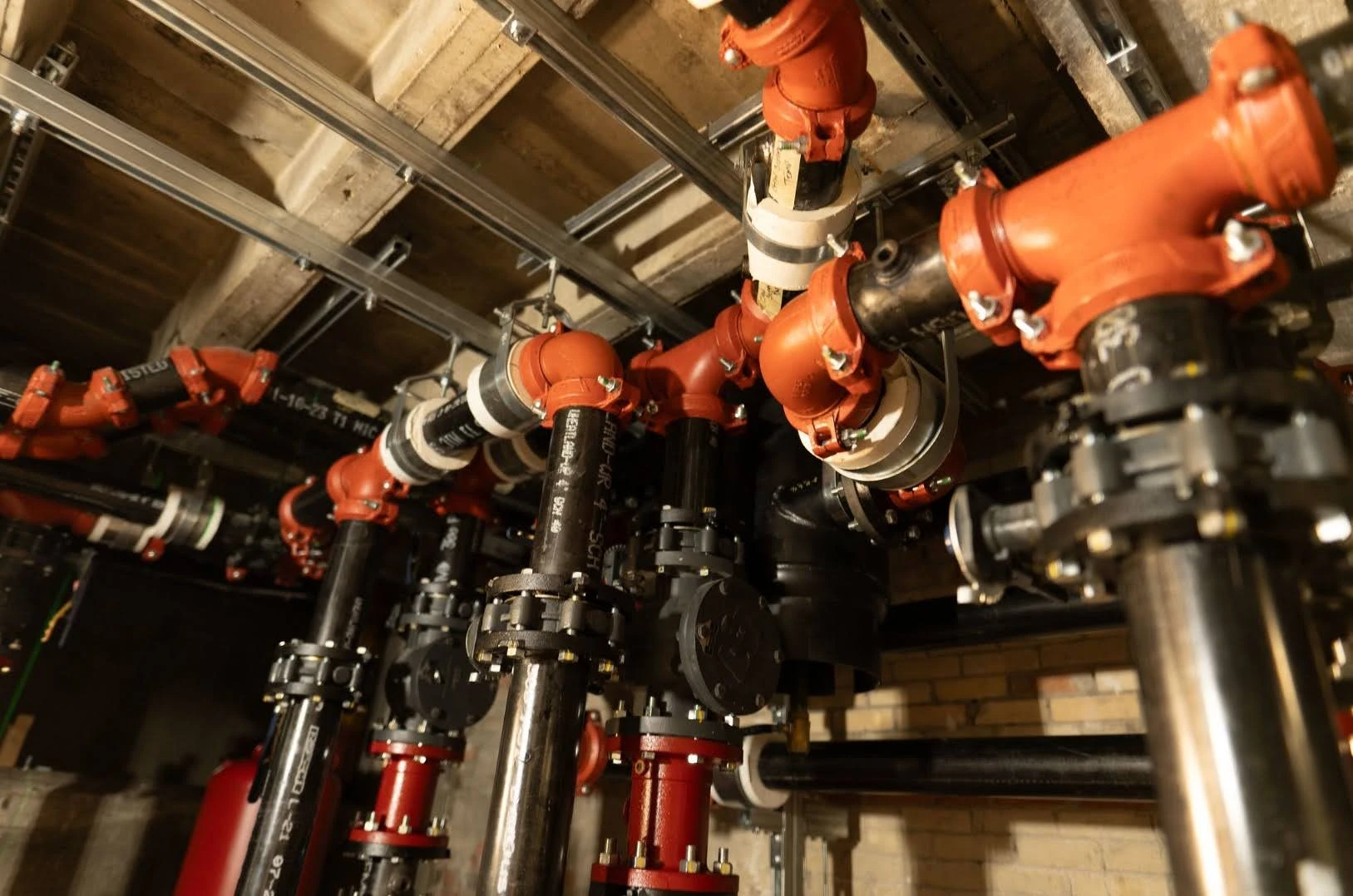
Pipes that are poorly fabricated or improperly assembled can lead to minor inconveniences like leaks, to dangerous issues like total failures in high-pressure systems. Due to the complexities and variations in pipe systems in industrial settings, each state determines which codes or standards must be followed during the pipe fabrication process.
Some of the most common codes and standards include:
- The ASME B31 series, which covers standards for various kinds of piping, including Power Piping and Building Services Piping
- AWS D1.1, which addresses welding practices for steel structures, a critical component of pipe fabrication
- API 570, which covers the inspection, rating, repair, and alteration procedures for metallic piping systems and their associated pressure-relieving devices
- Several specifications from the American Society for Testing and Materials (ASTM), which address steel tubes and pipes
Additionally, the American Society of Mechanical Engineers (ASME) issues standards for the qualification of steel welders. Sylvan maintains ASME Section IX authorization for boilers and high-pressure piping.
In addition to protecting business operations, employees, and the environment, pipe systems that meet industry standards will perform at higher levels for longer. Pipes that don’t comply with best practices, or are made and installed by unprofessionals, can be inefficient at best and dangerous at worst.
Sylvan has decades of experience in industrial pipe fabrication, from the energy sector to steam plants, delivering on-time project execution with the highest levels of precision and safety. Contact Sylvan’s pipe fabrication team today to find out more.