
In commercial and industrial construction, the design model is only as valuable as your ability to act on it. For sheet metal fabrication specifically, the handoff from BIM to the shop floor was once one of the most friction-filled stages of a project. The process relied on printed drawings, manual takeoffs, email chains carrying the latest revisions, and a persistent risk that the information reaching the fabricator was already out of date.
Stratus software is a fabrication management platform built specifically for MEP contractors that replaces those outmoded methods. At Sylvan, we’re integrating it into our workflows to connect detailing work, our sheet metal fabrication shop, and our field installation teams. What follows is a look at how this fabrication shop management software works in practice and how it improves project delivery.
The Problem Stratus Software Was Built to Solve
Anyone who has managed a sheet metal scope on a complex project knows the coordination challenges that come with it. Tight schedules and design changes are commonplace. If a revision doesn’t reach the fabrication team in time, it leads to rework, wasted material, and installation crews waiting on parts that were built to the wrong spec.
The traditional workflow puts information in too many places at once. Drawings live on a server somewhere, and revisions are buried in emails or marked up on paper. Project managers track fabrication progress through conversations and spreadsheets. By the time a change makes its way from the detailer through the project manager to the shop floor, it’s passed through multiple handoffs, and each one is an opportunity for something to get lost.
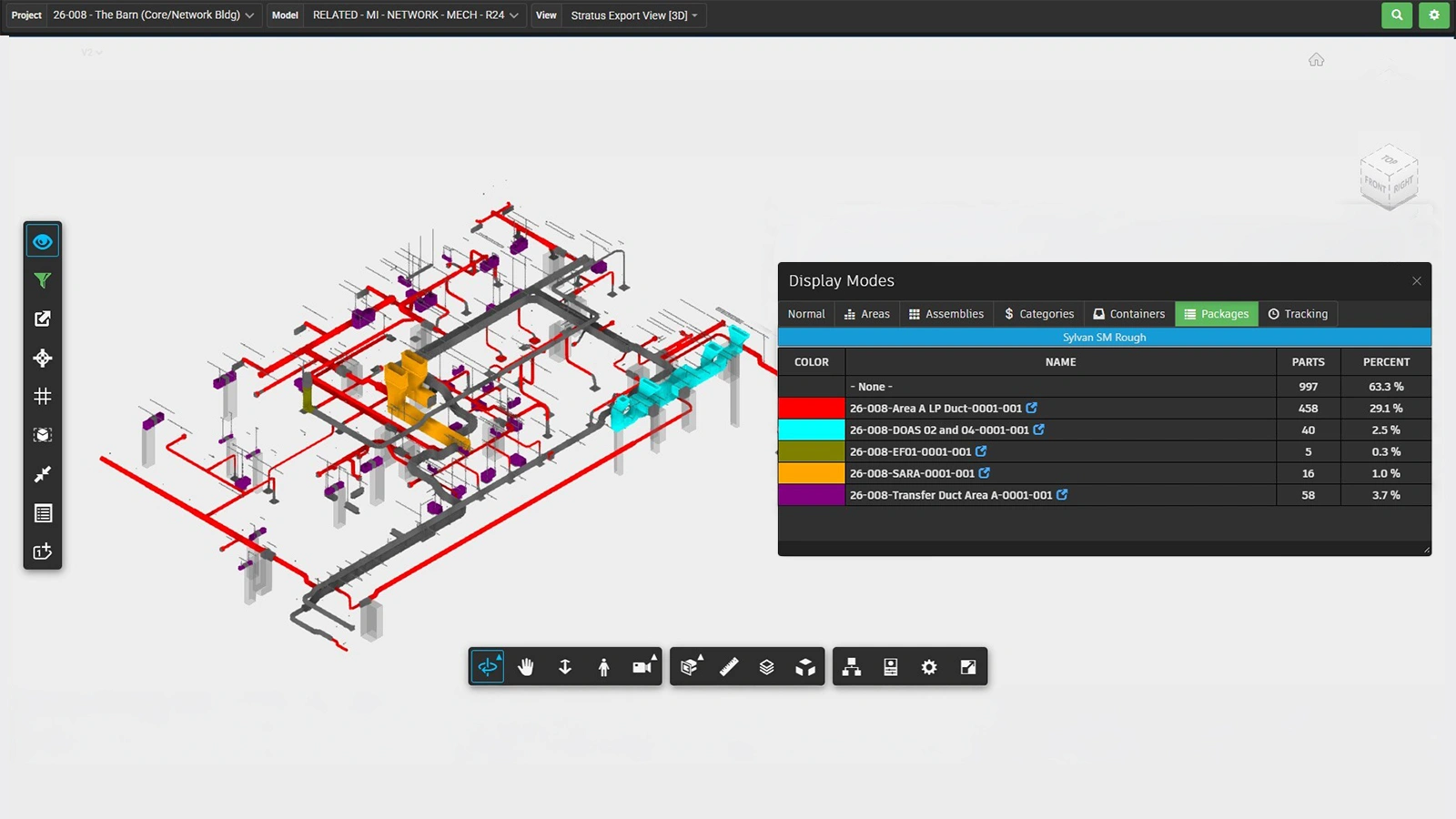
Having a fabrication tracking software replaces that chain with a single shared platform. Once the model is published to Stratus, fabrication packages are defined and sequenced directly from it. Each piece is tagged and tied to its installation location. When detailers make updates, they publish back to Stratus construction software so the shop is always building from current information, and project leadership has a live view of where every part, package, and assembly stands in the fabrication lifecycle.
How It Works Inside Sylvan’s Sheet Metal Workflow
Sylvan is currently using Stratus for tracking tasks from the BIM stage through project management. When we complete implementation, Stratus will change several aspects of our workflow.
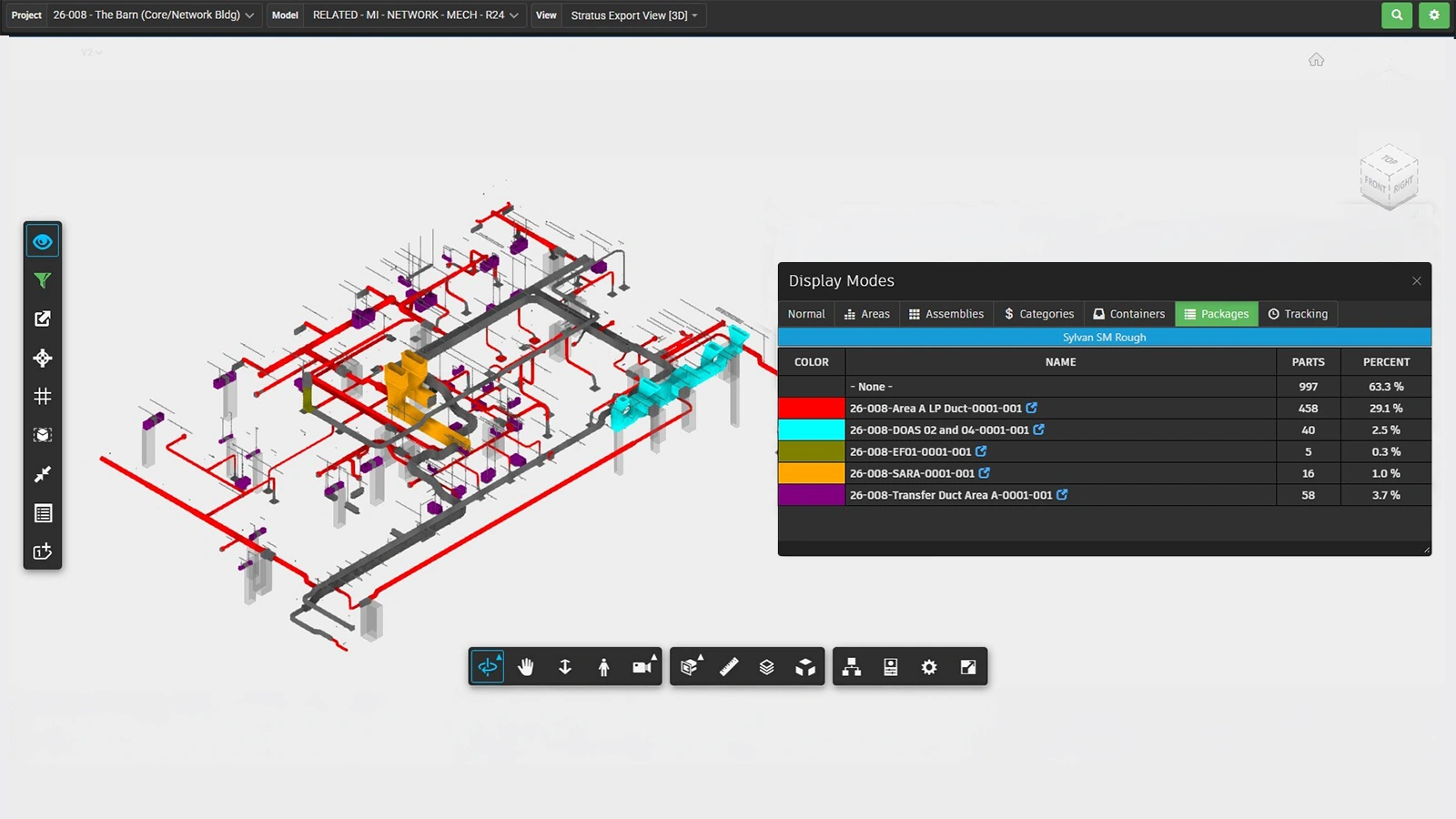
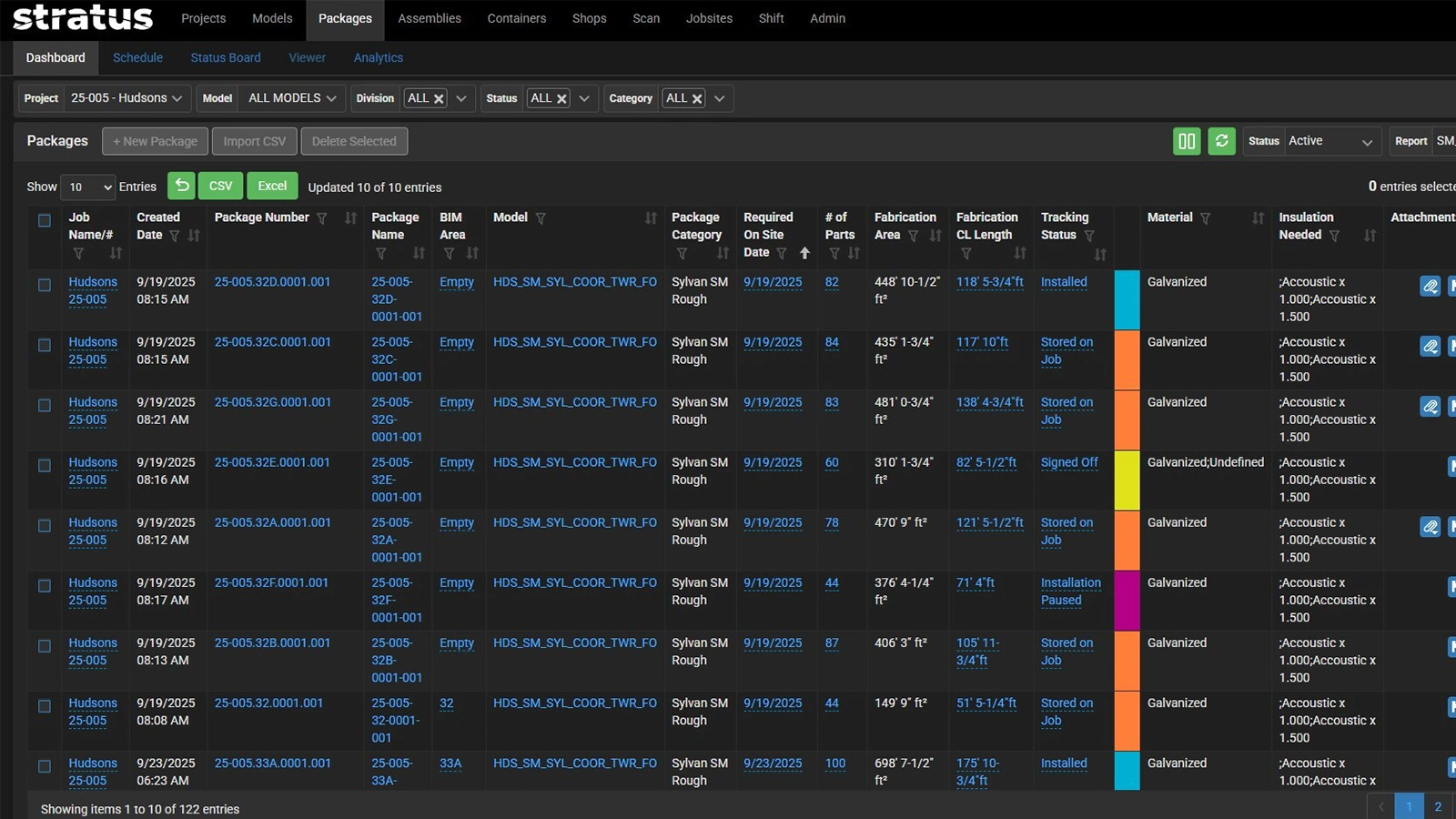
After the model is complete and coordinated, the user will publish it to Stratus software. From there, project managers and schedulers will define and sequence work orders for release to the shop. Fabrication packages will be picked directly from the platform, with each piece already tagged and associated with its installation location. When packages are ready to be built, the tracking status will be updated so the shop can see what needs to be prioritized. As work moves through fabrication, through delivery, and into the field, tracking statuses will update to reflect where each element stands.
At any point in that process, the team will be able to pull up the model and see the fabrication status of every component. The platform can show what’s been built, what’s in process, what’s waiting on a change, and what’s on site ready for installation. Project managers can generate reports on metrics like total length, weight, and delivery status directly from the model, which gives field supervisors the information they need to plan manpower and sequence installation efficiently.
This improves schedule compliance and reduces last-minute surprises during field installation. Our clients will receive reports, delivery schedules, and real-time project visibility without any burden on their own systems or teams.
How Stratus Software Improves Processes
Tools like Stratus enable teams to address long-standing challenges. Having a fabrication shop management software eliminates time-consuming, error-prone tasks such as manually defining and annotating spool sheets, creating reports, tracking fabrication status in spreadsheets, taking off quantities from drawings, and generating bills of materials from those takeoffs.
When a revision came in under the old workflow, someone had to identify what changed, update the documentation, communicate the change to the shop, and verify that the shop had received and acted on it. Every step in that chain was a place where something could go wrong. For instance, a piece was built to the old spec, and the error wasn’t caught before reaching the field. Installation had to pause while the correction was fabricated and delivered.
Building pieces correctly the first time would have eliminated that rework. When field conditions do require a change, it’s communicated back through the platform quickly. That results in substantial material and labor savings. It also reduces the roadblocks and conflicts that wear on teams and relationships over a long, complex build.
Stratus software also provides reports on key metrics like total length and weight that allow foremen to efficiently leverage manpower for installation of packages on site. They use the data to right-size crews for the day’s specific installation packages, which means fewer idle hours and a field operation that stays aligned with the broader project schedule rather than reacting to what shows up on the truck.
Where the Value Compounds on Multi-Trade Projects
Stratus software delivers its highest return on projects where one partner is performing multiple scopes. On projects that combine sheet metal, mechanical piping, and plumbing, the value is exponentially greater than on a single-trade project. Each trade has visibility into where the others stand in the fabrication cycle, which allows releases to be sequenced in the right order and gives installation crews better information about which areas to work and when.
In multi-trade environments, the coordination problems that generate the most costly delays are almost always information problems. One trade doesn’t know that another has fallen behind, or field crews arrive to install in a zone that isn’t ready yet. Stratus makes that information visible to everyone on the same platform, so crews can make scheduling adjustments before they become field disruptions.
How Sylvan Manages the Transition to Digital Fabrication Workflows
Implementing a platform like Stratus construction software is as much a change management challenge as a technical one. Our team members are highly experienced and have built reliable workflows over years of practice. Asking them to operate differently, even when the new approach is demonstrably better, deliberate, hands-on support and early proof that the change is worth making.
We prioritize training and getting users to a tangible win as quickly as possible. If someone on the shop floor or the project management team can point to a specific moment where Stratus saved them time or gave them information they would not have had otherwise, it helps make the case for adoption.
The technical setup also matters. Stratus is highly customizable, and taking the time to plan the desired workflow before configuration begins gives the platform a clearer goal to be built around. Having a setup that aligns with how the team actually works makes the transition smoother. The combination of well-trained, engaged users and a thoughtfully configured environment is where Stratus software delivers its full potential, and getting there is a deliberate process.
What the Future Looks Like
The platform we use today is already a substantial improvement over the workflows it replaced, and there’s even more promise for evolution in the future. Stratus’ ability to aggregate fabrication status, tracking history, installation sequencing, and schedule performance can be the foundation for emerging technologies. With that consolidated data, new platforms will be able to forecast progress, flag bottlenecks before they materialize, and eventually automate status updates through machine vision scanning on the job site.
For now, the value is concrete and immediate. Construction projects change daily, and decisions made on stale information are expensive. Stratus gives our teams a live view of fabrication status and a reliable path from the model to the shop to the field, which increases schedule certainty and installation quality.
To learn more about Sylvan’s approach to technology-driven construction delivery, or to explore how our sheet metal and piping capabilities can support your next project, reach out to connect with our team.