
The decisions that determine whether a construction project succeeds or struggles are often made in the weeks and months before a single crew arrives on site. Preconstruction planning strengthens teams’ ability to proactively identify potential risks and establish the conditions for on-time, on-budget delivery. If this stage is skipped, or treated as another box to check off, it may result in missed deadlines, cost overruns, rework, and communication failures.
As owners and facility leaders evaluate construction partners, preconstruction capability stands out as one of the most reliable indicators of project performance. This article explains what preconstruction involves, who should be part of it, and why the rigor applied during this phase pays dividends through every stage that follows.

Key Takeaways
- The decisions that determine whether a project succeeds are made before construction begins. Preconstruction is where risks are identified, costs are controlled, and the conditions for on-time, on-budget delivery are established.
- Preconstruction is an active planning process involving estimating, scheduling, scope development, and constructability review working in coordination.
- Bringing experienced trade contractors into preconstruction reveals the sequencing realities that design teams working in isolation miss. That knowledge prevents the rework cycles that derail schedules and inflate costs.
- The further upstream a problem is identified, the less it costs to resolve. Preconstruction investment consistently reduces change orders, contingency requirements, and field-level surprises.
- Not all preconstruction processes are equal. The partner who brings the most value is the one with the expertise to resolve hard questions before the project begins.
What Is Preconstruction?
Preconstruction is the structured planning phase before construction begins. It includes defining the project, identifying potential issues, planning and scheduling the scope, developing cost estimates, and analyzing the job’s specific requirements. When done effectively, it provides the construction team with a clear operational roadmap and gives owners a realistic understanding of cost, timeline, and potential risks.
Preliminary planning in construction also helps owners assess a project’s feasibility before committing to significant resources. It allows teams to determine early whether costs are viable and whether the project can be constructed within the available space. Gaining this clarity upfront is far less costly than uncovering these challenges after construction begins.
Preconstruction is an active, iterative process involving multiple disciplines working in parallel to resolve the questions that would otherwise come up in the field.
Who Is Involved in Preconstruction?
Preconstruction requires input from across the project team:
- Owners and facility leaders bring the operational requirements, constraints, and long-term performance goals that need to drive every downstream decision.
- Estimators develop cost models and identify the variables that carry budget risk.
- Project managers establish the scheduling framework and coordinate across disciplines.
- Engineers and design professionals assess constructability and flag coordination conflicts before they reach the field.
On complex industrial and commercial projects, trade contractors play a critical role as well. Involving experienced tradespeople into the preconstruction process, especially on projects involving multiple scopes, helps surface sequencing realities that design teams working separately can overlook. For example, a mechanical crew knows their work needs to be completed before structural elements close off access, and an electrical team knows what spatial requirements their scope demands before adjacent systems are installed. Applied during planning, this insight and communication helps prevent the rework cycles that derail schedules and inflate costs.
Sylvan’s in-house estimating, drafting, and project management capabilities enable this level of multi-trade coordination within a single team, rather than across organizational boundaries. As a result the conversations that need to occur before construction begins happen earlier, with more complete information, and shared accountability for outcomes.

What Happens During Preconstruction?
Preconstruction moves through several interconnected workstreams, each feeding into the others as the project definition becomes more refined.
Those workstreams include:
- Site evaluation and feasibility
- Scope development
- Estimating and cost modeling
- Scheduling
- Constructability review
Site evaluation and feasibility typically mark the start of the preconstruction planning. Teams assess existing conditions, identify constraints, and evaluate the project’s viability against the owner’s objectives and budget. This stage also identifies potential issues, such as soil conditions and utility conflicts, that would be far more expensive to address mid-construction.
Scope development translates the owner’s goals into a clearly defined and actionable project scope. This requires detailed coordination between design and construction teams to ensure the scope is complete, realistic, and buildable within the project’s constraints. Addressing scope gaps at this stage is significantly more efficient and cost effective than resolving them during active construction.
Estimating and cost modeling are two of the most consequential preconstruction activities. Developing a reliable cost model requires an understanding of market conditions, labor availability, material lead times, and project specific risks. Without this context, estimates may appear precise but often carry significant exposure in execution.
Scheduling at the preconstruction stage establishes the sequencing logic that will guide how the project is built. Trade dependencies, equipment procurement lead times, permitting milestones, and owner operational constraints all need to be reflected in the baseline schedule. Schedules built with this level of detail are far more resilient than those driven by target completion dates.
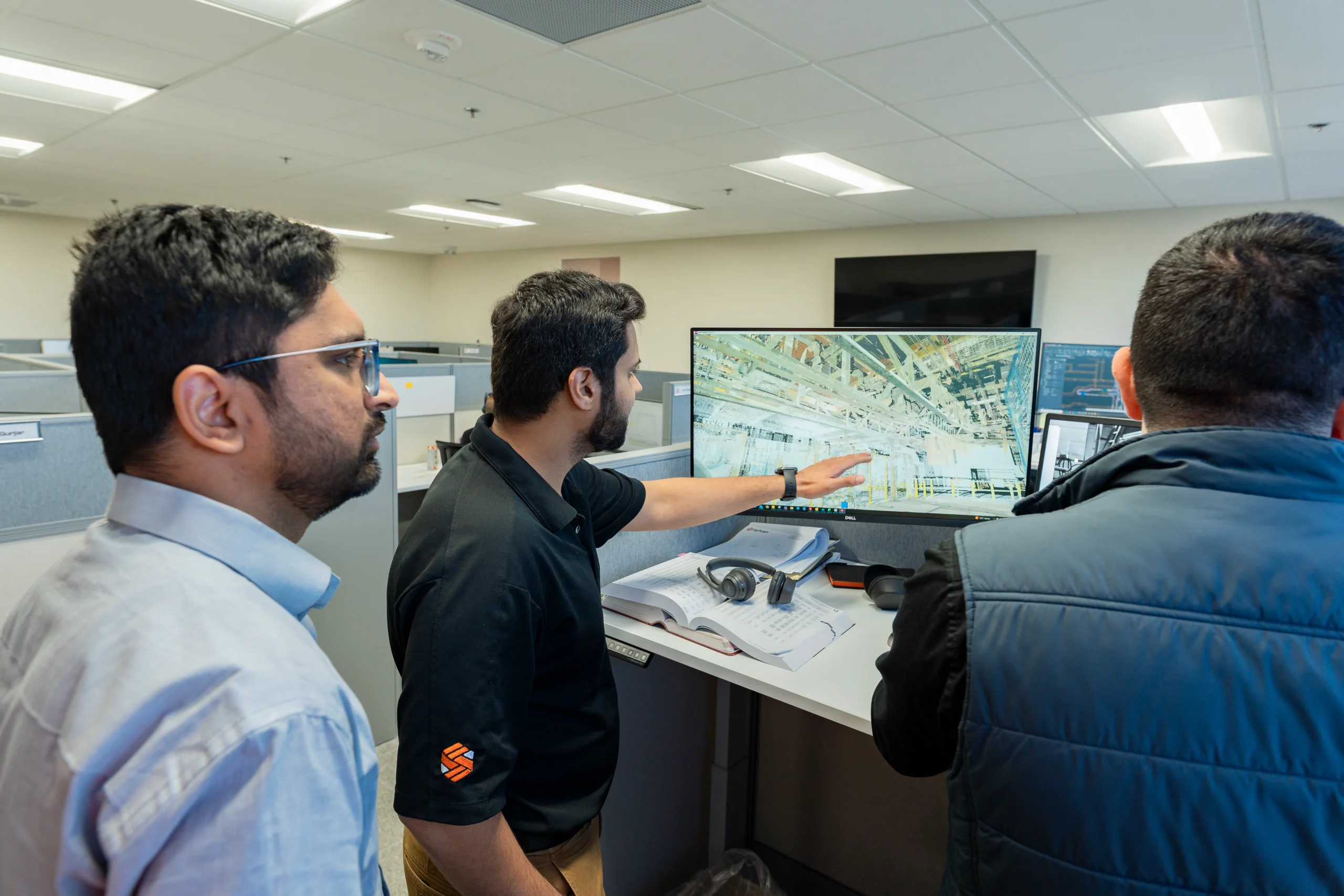
Constructability review is the process of evaluating the design against the realities of field execution. BIM modeling and virtual coordination allow teams to identify clashes and confirm installation sequences before any work is performed in the field. Problems resolved in the model can be addressed in hours, whereas resolving the same problems in the field takes days or weeks.
How Preconstruction Planning Reduces Project Costs
The time spent resolving issues before construction begins reduces the cost of addressing them by an order of magnitude. Identifying feasibility challenges or misalignment with a contractor early on is significantly less costly than reaching those conclusions after work has started.
Preconstruction controls costs through several key mechanisms. Detailed scope development reduces change orders by ensuring the work is fully defined before pricing is finalized. Early procurement identification allows long-lead items to be secured before they become schedule-critical. Accurate estimating reduces the contingency padding that owners and contractors build into budgets when uncertainty is high. Constructability reviews further limit the potential costs by addressing differences between design intent and field conditions before the result in rework.
Preliminary planning in construction also provides peace of mind to owners managing facilities with operational continuity requirements. Projects that are thoroughly planned upfront carry significantly less risk of disruption, unexpected costs, or schedule delays, helping preserve both facility operations and the strength of the owner-contractor relationship.
Preconstruction Planning in Practice: What It Looks Like at Sylvan
Sylvan’s preconstruction process is built around the same principle that defines all of our work. The more thoroughly a project is understood before it begins, the more effectively it performs when execution starts. Our dedicated in-house designing, estimating, drafting, and project management teams work in coordination from the earliest stages of a project, applying decades of multi-trade field experience to the planning process rather than waiting until construction to uncover what the work requires.
Our approach is particularly valuable on complex commercial and industrial projects, where the cost of getting preconstruction wrong is high and the opportunity to recover is limited.
Sylvan recently worked on a high rise project that spanned nearly 20 floors of an existing building. Because of preconstruction planning, we were able to produce labor savings that we wouldn’t have generated otherwise.
In high-rise projects, it’s common for hoist and elevator time to be shared across every trade. Everyone fights for their opportunity to get to where the work is so they can stay productive. Getting material to the upper third of a tower reliably enough to support a productive installation schedule is often the single biggest threat to the job. When Sylvan estimated the project, we considered these constraints and estimated that, to have full access to the hoist, we would have to move materials on the weekend, when labor costs are highest.
However, preconstruction planning allowed us to approach the problem in a different way. Instead of planning around the logistics bottleneck, we asked what it would take to eliminate them. The solution was to use an offsite kitting operation. All material would be staged and packaged in a warehouse and containerized and organized by room, with each container sequenced to how the work would actually be installed. Our teams wouldn’t have to send loose material to the building to be sorted under congested, costly conditions. Every delivery was a clean, repeatable drop.
Once the offsite operation was dialed in, the team could bring material for an entire floor into the building and up to the floor in under 15 minutes during a normal working day, inside the standard hoist windows they had originally assumed were unusable. The weekend overtime crews priced for material moves became unnecessary. The moves fit inside the standard workday, and the labor savings were significant when compared to the estimate. Those savings wouldn’t have been possible if we hadn’t been involved during the preconstruction phase.
Preconstruction as a Competitive Differentiator
Not all preconstruction processes deliver the same level of value. The difference between a preconstruction effort that drives project certainty and one that produces a document in a binder is the depth of expertise applied, the range of disciplines coordinated, and the extent those planning the work have direct experience executing it.
Owners who factor in construction-phase capabilities have the opportunity to gain additional value by placing equal weight on preconstruction capabilities when evaluating potential partners. The greatest value comes from a partner with both the capability and commitment to resolve critical questions before the project begins, and the accountability to stand behind the answers when construction starts.
Preconstruction is where the commitment becomes visible. With Sylvan, it’s where every project gets its strongest start. Reach out to our team to learn more about our approach.