
There is a moment in almost every complex construction project when the benefit of earlier collaboration becomes clear. It may surface when a design detail proves more difficult to build in the field than anticipated, or when equipment lead times impact an already tight schedule. In some cases, it happens when multiple trades arrive at the same location only to find that their work can’t be performed at the same time.
Early contractor involvement (ECI) is the practice of preventing those challenges before they arise.
Key Takeaways
- The decisions that are most expensive to reverse are made earliest. Specialized trade input has the most value when it can still influence how the work will be built.
- Research across nearly 7,000 U.S. projects found that traditional design-bid-build delivery averaged 13.48% time growth. ECI-aligned delivery methods reduced that figure to under 2.5%.
- On multi-trade projects, clash detection and sequencing decisions made in the model are dramatically less expensive than the same decisions made in the field.
- Multi-trade capability is what makes ECI most effective. When the trades coordinating in preconstruction are part of the same team, the conversations happen faster, earlier, and with fewer handoffs.
What ECI Actually Means
At its core, early contractor involvement means the construction team has a seat at the table during planning and design, not just during execution. The trades responsible for delivering the work are given the opportunity to contribute meaningful input on constructability and sequencing before design is finalized.
Contractor collaboration can take on different forms depending on the project and the delivery method. It may include reviewing design drawings for constructability before they are finalized, or providing real-time cost modeling that gives general contractors accurate pricing data instead of relying on historical estimates. On multi-trade projects, specialty trade contractors with direct knowledge of sequencing requirements help inform the schedule before it’s finalized.
ECI is not simply moving the traditional handoff earlier in the process. The value comes from genuine integration, where specialized trade knowledge helps inform design decisions as they are being made, rather than evaluating them after the fact.
Why the Traditional Model Creates Predictable Problems
The standard design-bid-build process follows a linear sequence: design is completed, bids are solicited, and construction begins. That sequence provides clarity and has logic to it, but it can also introduce well-documented challenges.
In the traditional design-bid-build approach, the owner and design consultant often focus heavily on advancing the design itself. Decisions are typically made by comparing design alternatives supported by cost and schedule estimates based on historic data. Although ubiquitous in the design and owner sectors, that data may not be an accurate reflection of current markets.
As a result, early-stage projections can carry a higher degree of uncertainty. In a seminal study of 258 U.S. and international transportation infrastructure projects worth $90 billion, researchers found that cost estimates were systematically misleading, with cost overruns occurring in 90% of projects and averaging 28%.
These outcomes highlight the limitations of planning without real-time, construction-informed input. Early contractor involvement helps address this gap by bringing current market insight and specialized field experience into the process from the outset.
Benefits of Early Contractor Involvement in Construction
The benefits of early contractor involvement are both measurable and well documented. A study quantifying the benefits of ECI found that the ability to accelerate the schedule, flexibility during design and construction, and contractor design input were the most frequently cited benefits, regardless of project delivery method.
The same report noted that, in a study of 7,000 U.S. projects, ECI-aligned delivery methods consistently outperformed traditional design-bid-build (DBB). Average time growth in DBB projects reached 13.48%, compared to 2.46% for design-build and 2.42% for construction managers at risk. Cost growth followed a similar pattern, demonstrating the value of integrating construction expertise earlier in the project lifecycle
Separate research examining client perceptions of early contractor involvement found that improved innovation, enhanced constructability, and greater collaboration were perceived to be the most likely benefits of the approach. Taken together, these findings reinforce a consistent conclusion: projects perform better when construction knowledge informs decisions before they are finalized, rather than after they have already been made.
Where ECI Adds the Most Value
Early contractor involvement pays dividends across several interconnected areas of a project, particularly when multi-trade specialty contractors are involved early enough to contribute to planning. The common thread is timing. The earlier their specialized knowledge enters the process, the more it can influence outcomes.
- Constructability input — When a multi-trade specialty team is involved before design is finalized, problems that would have become field issues become model revisions, which are dramatically less expensive to address.
- Real-time cost modeling — Trade contractor engagement replaces historical estimates with current market pricing for materials, labor, and equipment, producing cost models that reflect what the project will actually cost.
- Procurement and long-lead identification — Identifying critical equipment early and initiating procurement before ground is broken protects schedules from lead-time risks that are invisible until they become crises.
- Multi-trade coordination — On complex projects, clash detection and sequencing decisions made in the model are faster and less expensive than the same decisions made in the field.
What Early Contractor Involvement Looks Like in Practice
Sylvan’s in-house ECI preconstruction capabilities, including estimating, drafting, and program management, are structured specifically to support early engagement. On multi-trade projects, having those capabilities in-house means the coordination conversations that ECI depends on happen within one team, with fewer handoffs and cleaner communication across scopes. Design questions are answered by the people who will execute the work. Cost models reflect the actual conditions of the project. Sequencing plans are built by teams who understand the interdependencies between trades because they manage all of them.
ECI works well whether an owner is contracting directly or a general contractor is assembling their trade team. For GCs in particular, bringing in specialty trade contractors early means accessing expertise that is directly tied to execution. The value comes from bringing specialized trade knowledge into planning and design while decisions are still flexible. Each trade contributes expertise in its own domain at the right moment, which is how Sylvan approaches preconstruction on complex projects. As a multi-trade contractor, we’re an active contributor to constructability and sequencing, not a passive recipient of completed design documents.
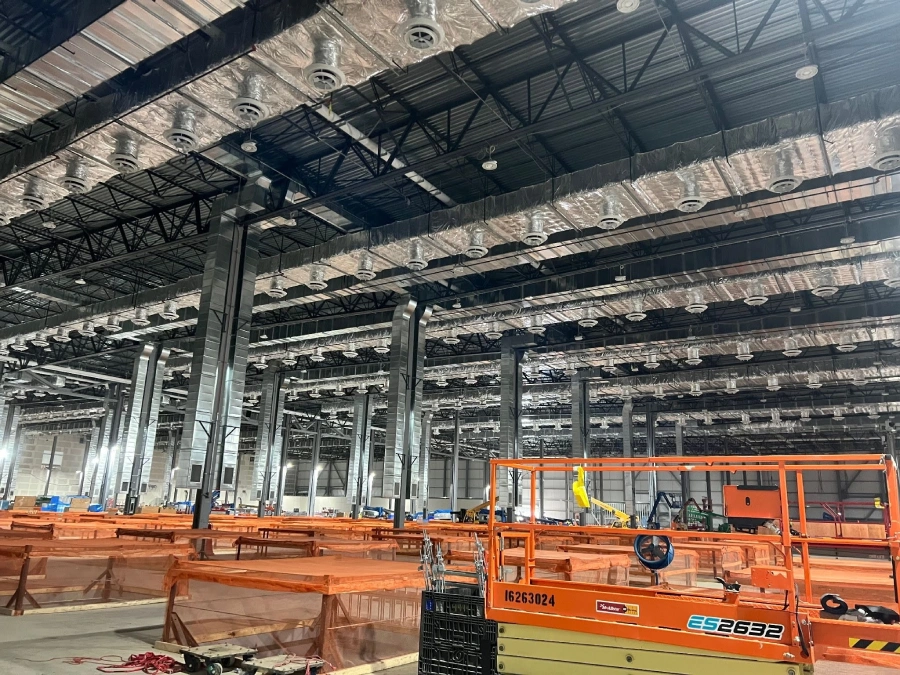
For example, we were brought in early to collaborate on Project Phoenix, which had an aggressive one-year construction schedule. It required a mechanical partner capable of rapid mobilization and seamless collaboration across trades. Sylvan was responsible for HVAC ductwork, chilled water piping, gas and water connections, and a complete siphonic storm drain system.
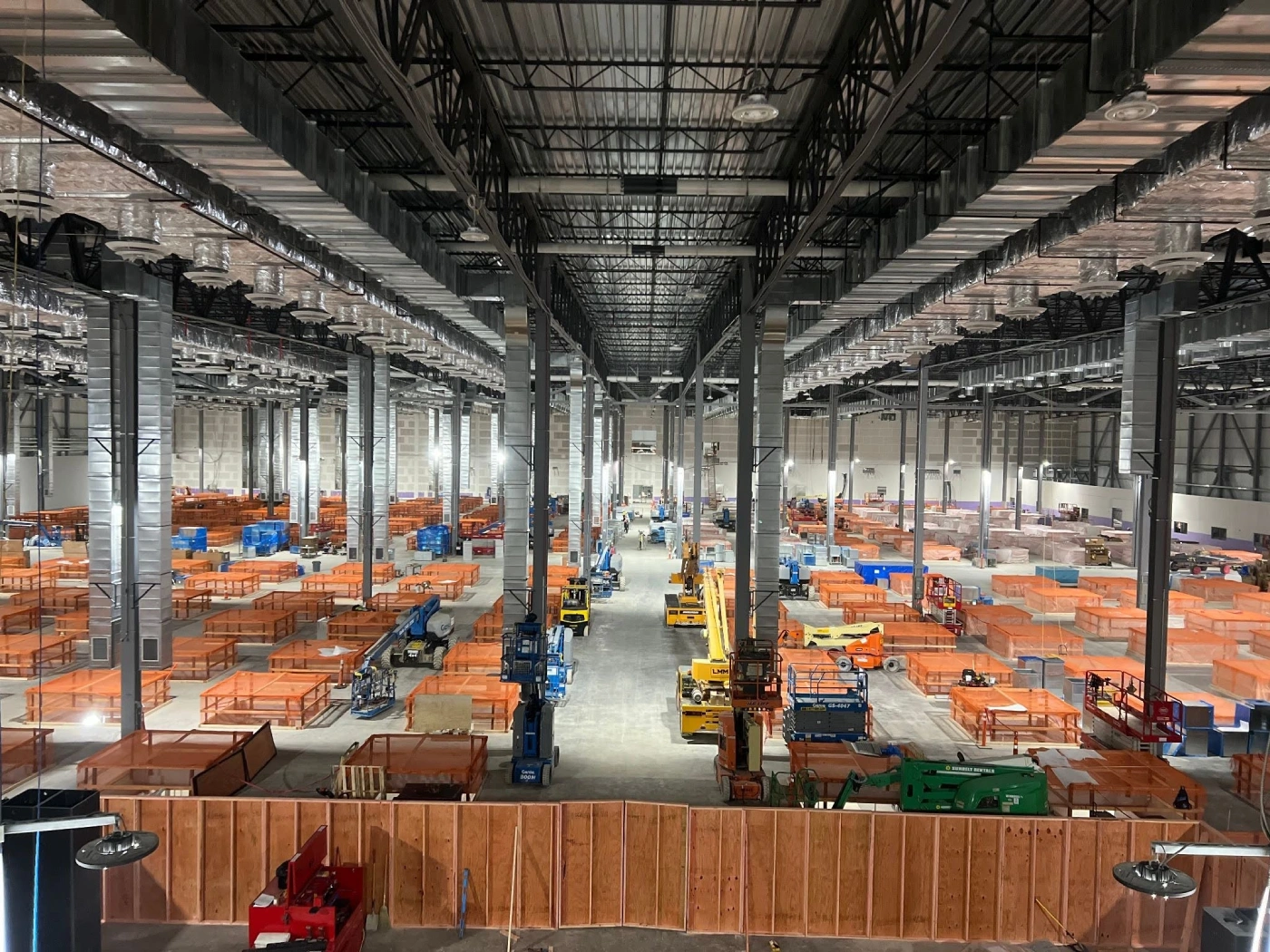
Our early involvement allowed the team to build a delivery strategy around the project’s actual constraints. This enabled us to assemble the right combination of crews and trusted subcontractors from the outset by securing skilled labor through strong local union partnerships, and coordinating night shifts to ensure continuous progress and efficiency around the clock.
Because of our early involvement, we completed more than 257,000 man-hours on schedule, with the field coordination and cross-trade communication required to keep a project of that complexity moving without the costly delays that often occur when mechanical contractors arrive late to a build. The work was successfully completed on time, and the craftsmanship held up to the demands of a project that left no room for rework.
The Right Time to Start Is Earlier Than You Think
When should you start involving your multi-trade specialty partners in a project? The right time for early contractor involvement is earlier than what feels necessary. The decisions that are most expensive to reverse, such as site selection, system configuration, structural assumptions, and procurement timing, are made in the earliest stages of project development. Engaging a specialty trade contractor during these phases allows those decisions to benefit from current construction expertise, real-world insight, and practical execution experience.
Multi-trade specialty contractors are often brought into advanced manufacturing and industrial projects after many foundational decisions have already been made. When executed effectively, however, ECI can be the difference not just in cost and schedule but in improving quality from design and construction all the way through owner occupancy.
The greatest value of ECI is not simply avoiding problems. It’s creating opportunities for better decisions, stronger collaboration, and greater project certainty from the very beginning. At Sylvan, we believe the best project starts with the right people at the right time. By engaging multi-trade expertise early, general contractors can move forward with greater confidence, knowing key decisions are informed by both design intent and execution realities.
Reach out to Sylvan to explore how early engagement can change the outcome of your next project.