
Commercial HVAC systems are complex, so choosing the right type of HVAC system for your building involves multiple considerations. While similar to residential systems, commercial HVAC systems treat more air and cover more space. There are numerous types of HVAC systems to choose from, and factors like the size of the building, the function of the interior space, and the geographic location should all play a role in choosing the system that works best.
A properly functioning HVAC system keeps your business running, improves air quality, boosts energy efficiency (and your bottom line), and ultimately impacts employee and customer happiness. This guide will break down the most common types of HVAC systems and the factors to consider when choosing one.
Key Takeaways:
- The importance of commercial HVAC systems
- What to consider when choosing the type of HVAC system for your space
- An overview of common systems: Rooftop Units (RTU), Variable Refrigerant Flow (VRF)/Variable Refrigerant Volume (VRV), Chilled-water systems, Central plants, and heat pumps
What is a commercial HVAC system, and why is it important?
A commercial HVAC system consists of the heating, air conditioning, and ventilation components that control air temperature, humidity, and quality in industrial or commercial settings. Depending on the type of facility, commercial HVAC systems may also support essential functions, such as refrigeration in food processing plants or the removal of excessive heat in manufacturing facilities that generate high levels of heat during operation.
Commercial HVAC systems are more than a feature that keeps things comfortable; they are a requirement. All commercial buildings are subject to minimum health, safety, and environmental standards at the national and local levels. Buildings serving specific industries – like food service, data centers, and healthcare – have strict regulations on air quality and temperature that must be met to avoid fines and even forced closure.
What to consider when choosing a HVAC system
Selecting the right type of HVAC system requires balancing immediate project needs with long-term operational performance. Regardless of which type of HVAC system you choose, taking time on the front end to prioritize your needs, challenges, and budget helps save time and money in the long run. Working with a trusted provider like Sylvan brings expertise and experiential know-how to help ensure the HVAC system is the right fit for your space.
Building use and load requirements
First and foremost, your HVAC system needs to meet the specific needs of your space. For instance, a hospital has very different air regulation and air quality standards than a manufacturing facility might, while a data center HVAC system must keep temperatures and humidities within a regulated and precise range.
Energy efficiency and operating costs
While budget is always a concern, it’s particularly important when selecting the right type of HVAC system. You’ll need to weigh options like how much you can invest at the start of the project, versus how much you’ll need to spend to operate the system effectively. Traditional water-chilled systems are very efficient at cooling large spaces, but would be an unnecessary expense for a smaller space.
Scalability
It’s imperative to consider future plans when selecting the HVAC system for your space. If you anticipate growth over the next several years, you’ll need a system that can accommodate it when the time comes. Similarly, if you anticipate production changes that would require components like refrigeration or additional ventilation, the system will need to have the capacity to handle them.
Redundancy and reliability
No one wants to deal with a system failure, but reliability is especially important in mission-critical environments where downtime is not an option. In industries like data center management and food processing, downtime equates to exponential hits to the bottom line. The ease of servicing the system should also be considered, as preventative maintenance is a key factor in HVAC performance and longevity.
Types of commercial HVAC systems
Once you’ve evaluated your needs and considerations, it’s time to dive into the different HVAC system options. This is not an exhaustive list, but it represents several of the most common HVAC system types. Reach out to Sylvan today to explore the best options for your facility.
Rooftop Units (RTU)
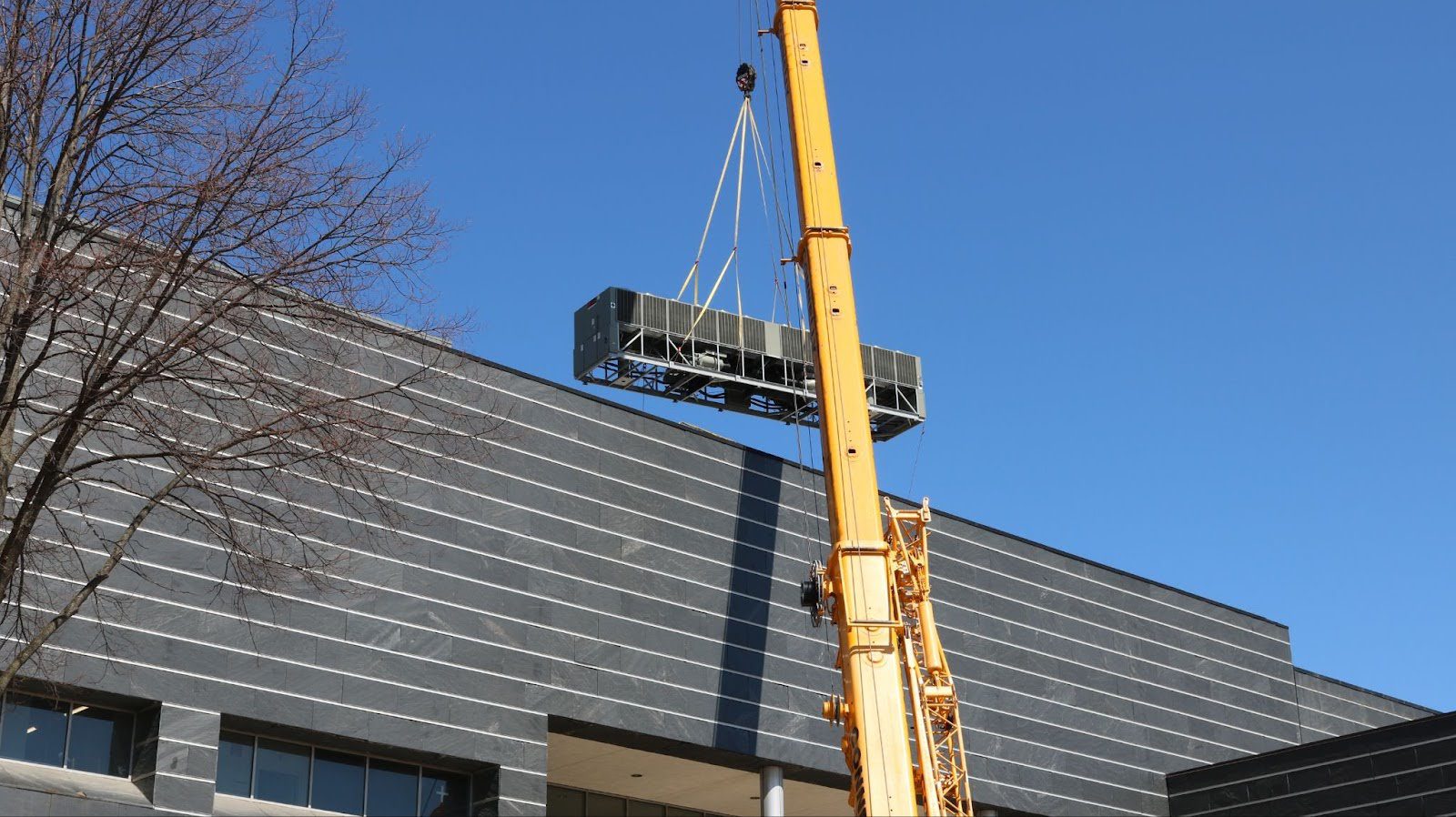
Ideal for small to mid-size spaces, rooftop units are self-contained systems installed on the roof of the building. RTUs are reliable, easy to service, and save space indoors. These systems pull in fresh air, heat or cool it using their own evaporators, compressors and condensers, then pump it into the building via a duct system.
RTUs are a good fit for offices, retail spaces, and smaller warehouses because they allow zone-by-zone control and don’t take up valuable indoor space. They are also a reliable choice, with a typical lifespan of 15 to 20 years.
Variable Refrigerant Flow (VRF)/Variable Refrigerant Volume (VRV)
A newer HVAC technology, these systems use refrigerants for heating and cooling. They rely completely on electricity, which makes them more cost-effective than systems that require water to function. Refrigerant is pumped between indoor evaporator units and outdoor condensing units and can be directed in specific zones.
VRF/VRV systems are a good fit for spaces with mixed uses or segmented areas, but don’t perform as well in expansive, single-space areas.
Chilled-water systems
For large commercial spaces, chilled-water systems offer a blend of performance and efficiency. There are two primary types: condenser water systems and air-cooled systems. Condenser water systems use cold water to remove heat from the air, powered by chillers that bring the water to the appropriate temperature. These systems, commonly used in large office spaces, hospitals, and schools, require extensive infrastructure and space to function properly.
Air-cooled systems eliminate the need for water by using fresh air blown across refrigerant coils to remove heat. These systems require less infrastructure and maintenance than water-based systems, which makes them a good option for medium-sized spaces.
Central/District
In both central and district cooling systems, the chilled or heated air or water comes from one centralized location, is pumped to other areas, and then processed by individual HVAC units. Central cooling systems are most often used by large developments that purchase chilled water from utility providers, which is then pumped underground and used in their buildings. District cooling systems operate similarly, but for entities such as college campuses or office buildings spread out over a large area.
Heat pump systems
Heat pumps offer a sustainable option that’s contained within a single system. They use an outdoor compressor and condenser, and an indoor evaporator and fan to heat or cool air. Heat pump systems are affordable and easy to maintain, but it’s important to note they don’t perform as well in areas with extreme temperatures.
Choosing the right type of HVAC system for your space requires considering both the short and long- term needs of your business, as well as your budget. Sylvan knows how to manage complex logistics, meet elevated expectations, and deliver HVAC systems that match your unique needs. Reach out today to find out more.