
In high-precision manufacturing environments, every detail matters. Although the conveyor systems that power manufacturing lines are huge, intricate structures, their performance depends on the accuracy of even their smallest parts.
When conveyor system design is rushed, siloed, or limited to traditional 2D drawings, performance issues often emerge later as rework, safety risks, installation delays, and maintenance challenges. Incorporating innovative technologies and software like BIM, additive manufacturing, and digital twin methodologies can help predict and even avoid many of these issues. Ultimately, these technologies can help to enable better outcomes like higher installation accuracy, safer installs, fewer field surprises, reduced downtime, and faster maintenance.
Featuring insights from Zain Juratli, BIM & PLM-CAD Manager for Sylvan’s Conveyor Division, this piece explains how accurate modeling, verification, and digital documentation directly influence real-world performance.
Key takeaways:
- What to consider when designing an effective conveyor system
- The value of incorporating technology like BIM, additive manufacturing, and digital twinning
- How innovation in the industry improves efficiency and performance
What is conveyor system design, and why is it important?
Conveyor system design provides the core infrastructure for manufacturing plants to produce, assemble, and distribute products. It requires the arrangement of numerous types of systems, like inverted power and free, overhead power and free, skid, electrified monorail system, tire, and wheel conveyors, in a layout that makes production as efficient, accurate, and safe as possible.
Regardless of the industry, the design, construction, and maintenance of a conveyor system requires high attention to detail, very low margins for error, and the management of important factors like line safety and reliability of parts. While the technical requirements for a food processing plant differ from those of an automotive plant, both can perform more efficiently and effectively when the design process is supported by technology and experiential know-how.
Zain Juratli, BIM & PLM-CAD Manager for Sylvan’s Conveyor Division, oversees the product life cycle management for all of Sylvan’s Conveyor products. In his role, Juratli manages everything from the design phase to the installation in the field for clients in the automotive sector.
“Everything in our industry requires a high amount of accuracy and precision. When you’re dealing with margins of error as small as 1/8 of an inch, one mistake can lead to a lot of issues. Those issues can mean more money, man-hours, safety issues, and more. The more time we can spend in the design phase – using technology that helps us catch any mistakes and streamline processes – the smoother the entire project,” said Juratli.
Incorporating technology
The industry standard for designing conveyor systems has been built on 2D drawings, like CAD. While 2D drawings can show the necessary components – from safety considerations down to the roller systems – they are limited by their lack of depth. Incorporating programs and technologies that provide 3D renderings, real-time updates, and interactive capabilities like load and pressure testing allows for far more customization, greater detail, and the opportunity to catch issues before they arise.
BIM (Building Information Modeling)
BIM serves as the blueprint for conveyor system design. Yes, it serves as a detailed map of the entire system, but more importantly, it integrates the numerous components from materials to part numbers into one comprehensive location. The value of incorporating 3D technology at the BIM stage is significant: it helps both designers and clients visualize the system more accurately and make adjustments specific to their needs.
“We leverage Autodesk Revit and Navisworks to build and aggregate our comprehensive 3D models, combining conveyor systems, detailed 3D site scans, and safety components into a single ‘digital twin.’ This allows us to determine exact precision, identify potential clashes, and validate the entire driven system long before a single part is manufactured,” said Juratli.
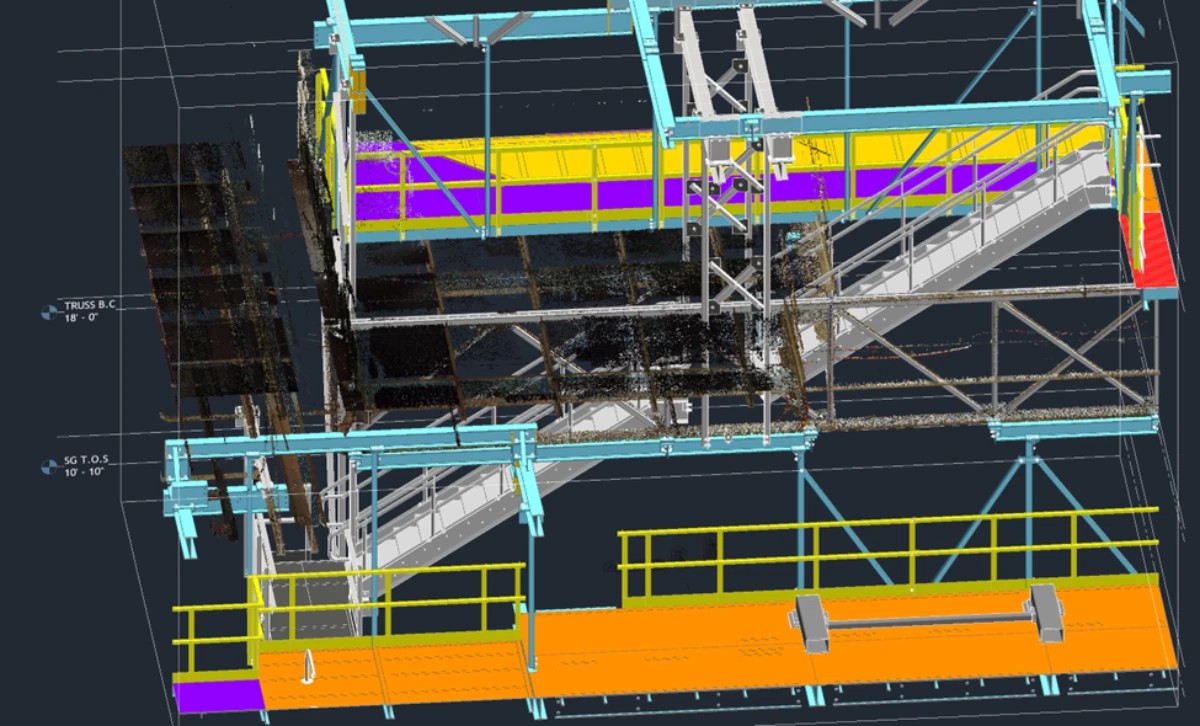
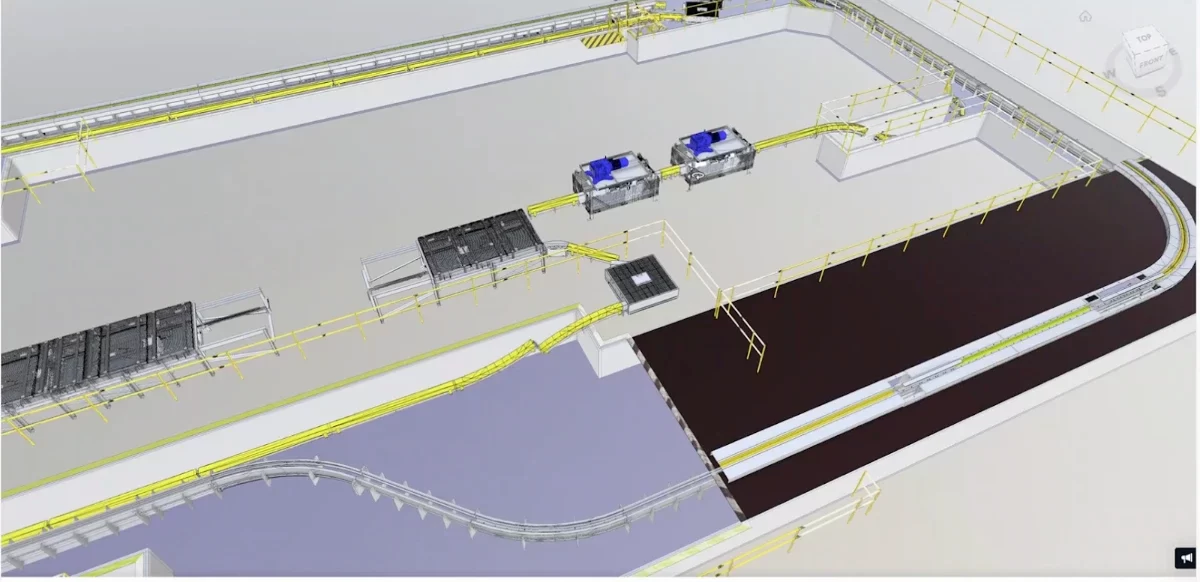
Once the design is optimized, it’s uploaded into Autodesk Viewer for client representation. This platform allows for illustration of the entire system design in an accessible way, integrating everything down to work orders attached to specific parts.
“When we walk clients through these realistic 3D environments instead of static 2D drawings, it naturally sparks deeper engagement. These extra questions are vital; they allow us to resolve potential problems and address safety considerations in a virtual space, ensuring a seamless and efficient installation process,” said Juratli.
Additive Manufacturing/3D Printing
If BIM serves as the initial and ongoing blueprint for a project, additive manufacturing serves as the next step in innovation. 3D printing, or the fabrication of a product from a digital design that adds material layer by layer, allows for more than just a customized product. By creating parts that fill needs that standard parts can’t, 3D printing represents endless opportunities for innovation within a conveyor system.
Juratli and his team recently designed and printed their first 3D part – a roller turn. They used Finite Element Analysis (FEA) within Autodesk Inventor Nastran to test it, then printed it to the exact specifications needed.
“We used generative design on this project for one specific reason: to see exactly where the stress was going. This approach empowered our team to move beyond legacy design assumptions that relied on conservative manual estimates, ensuring the final result was optimized by both expert experience and algorithmic precision. That’s where additive manufacturing saved the day. We 3D-printed these complex parts as a direct verification of our FEA,” said Juratli.
Additive manufacturing also allows designers a chance to verify parts before they are installed in a system, an opportunity that can save both budget and headaches in the long run. Being able to test that a part not only withstands the pressure and load but also performs at the highest level ensures that the system operates more efficiently overall.
“It’s one thing to see a stress map on a screen; it’s another to hold the part and verify maintenance clearances or load points in a physical mockup. We used these prints to bridge the gap between a digital theory and a real-world install—eliminating the design risks before they ever reached the floor,” said Juratli.
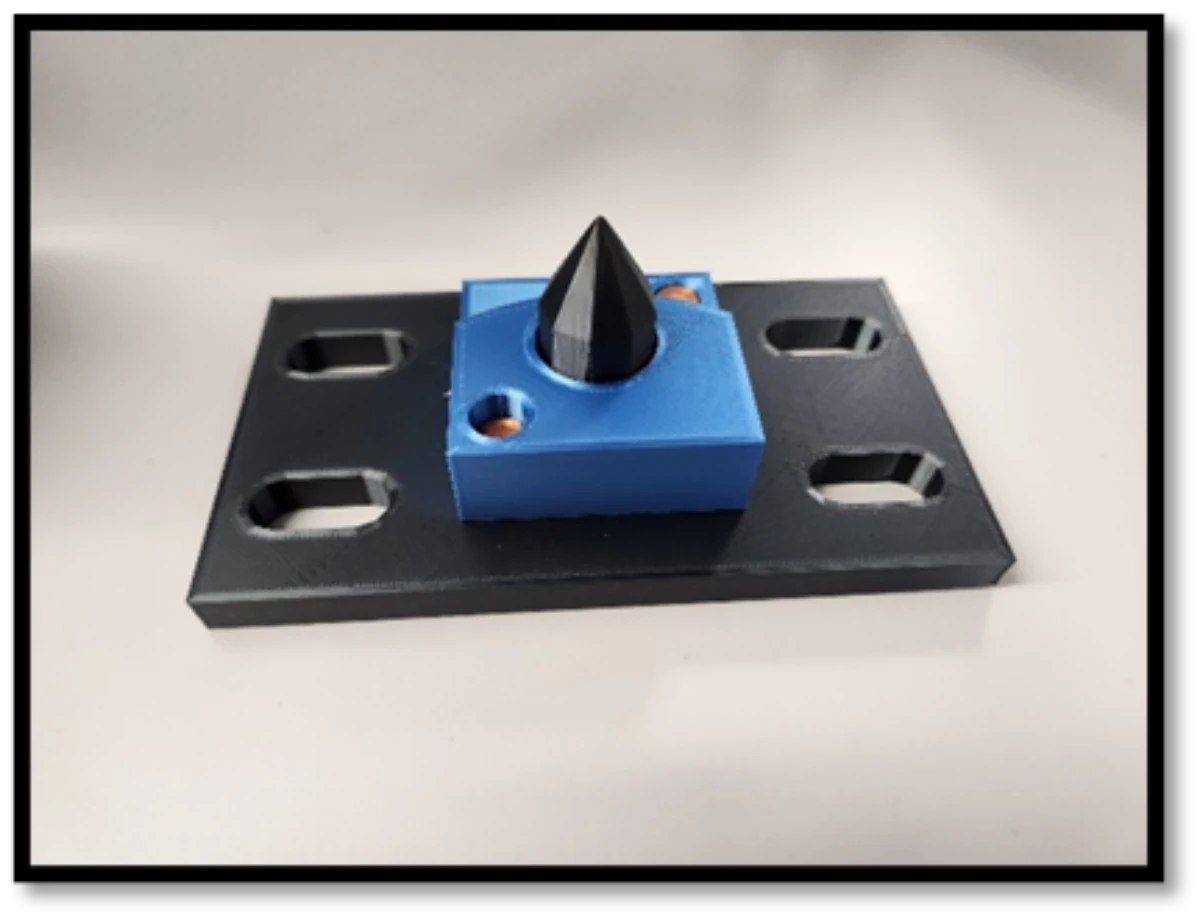
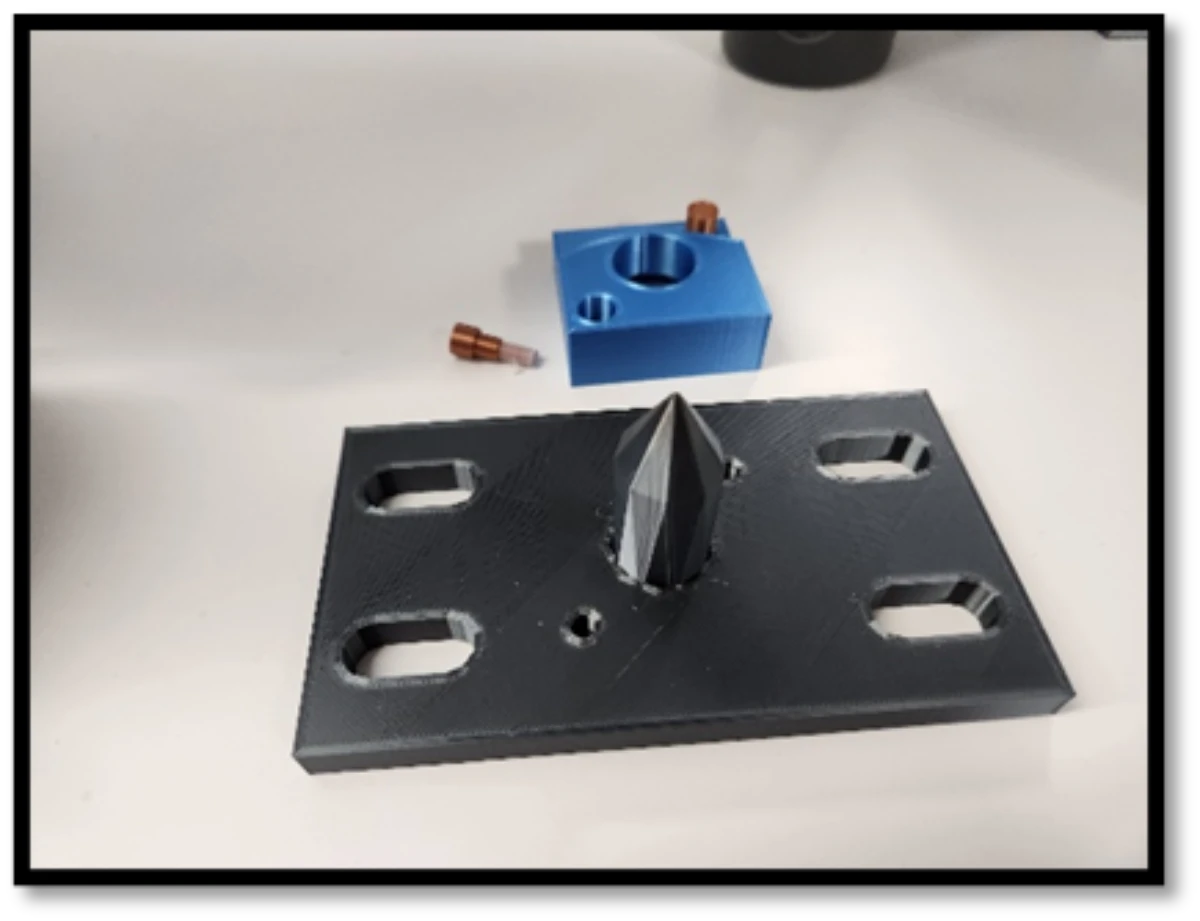
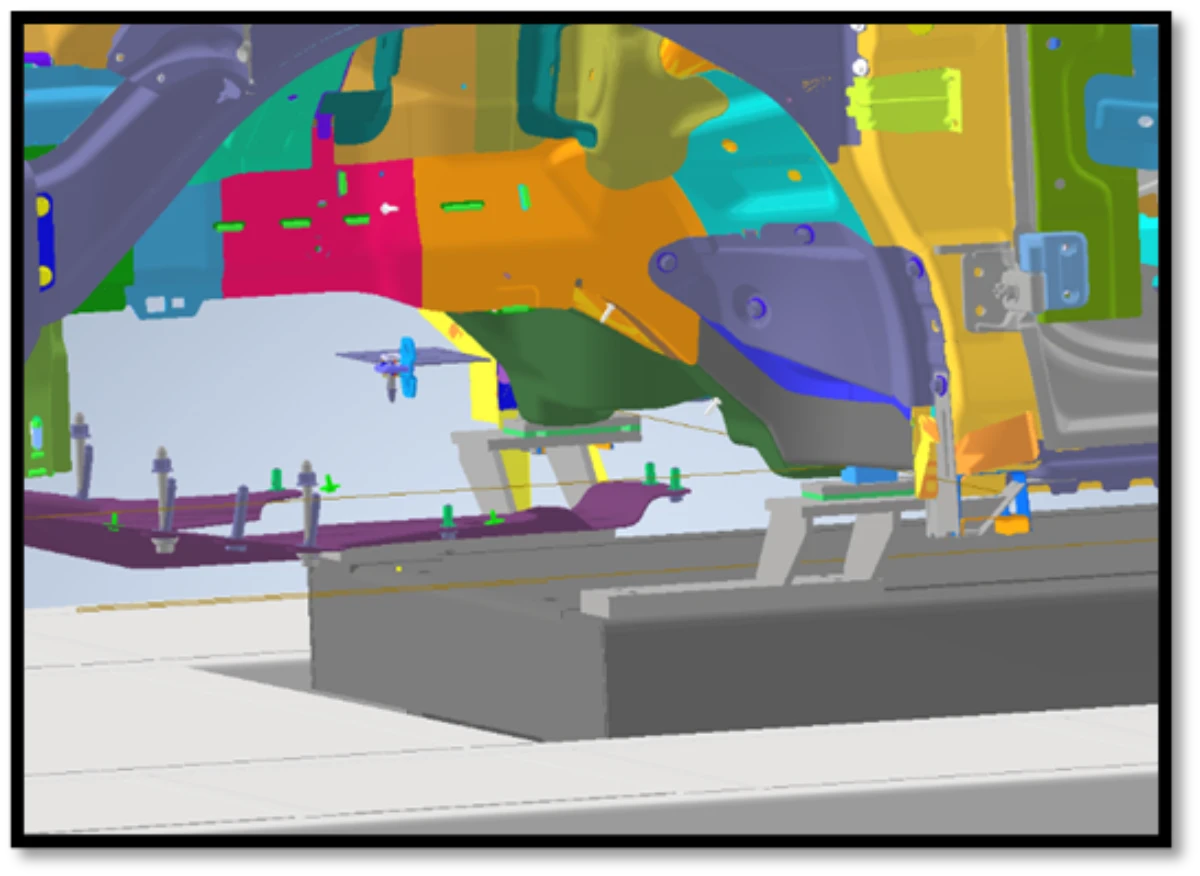
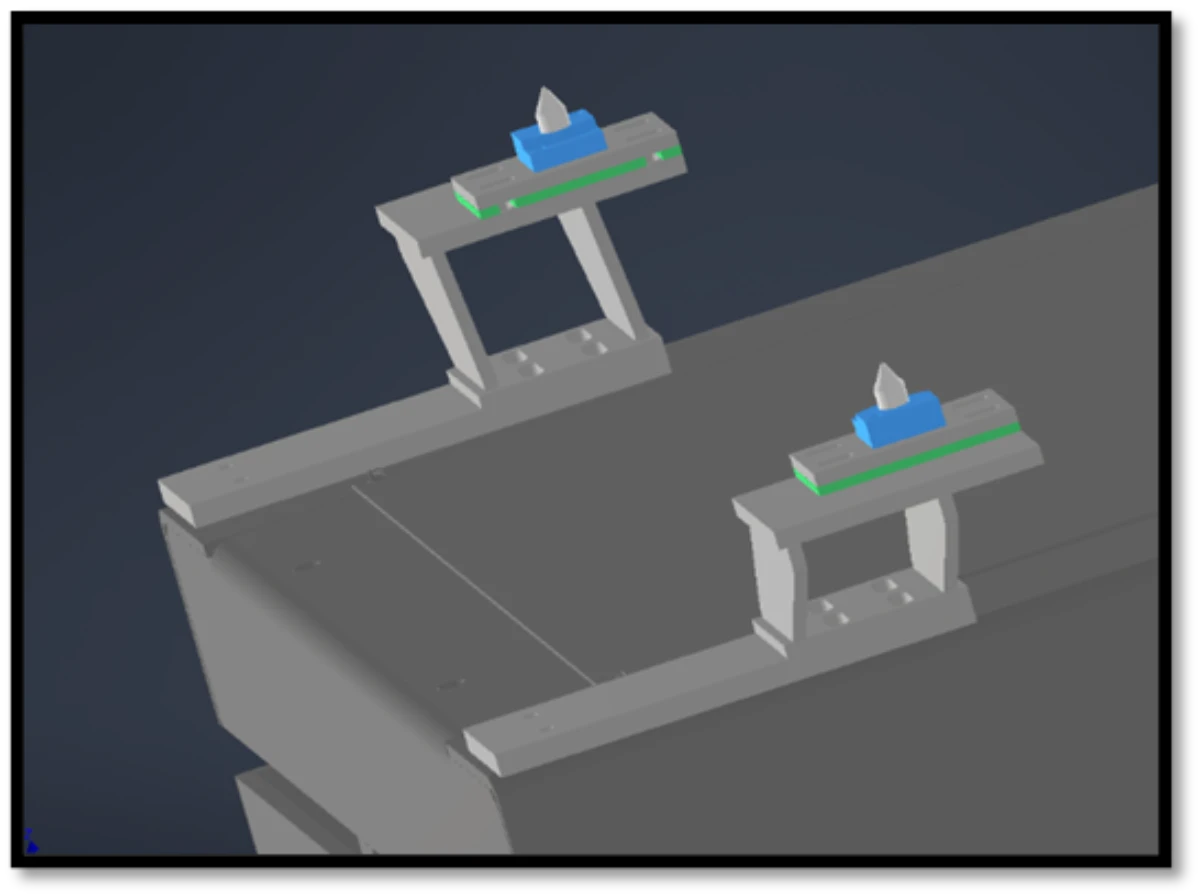
Beyond the ability to create a custom solution or test for an issue, designing and fabricating 3D parts in-house also provides a more seamless client experience. When that specific part needs service or replacement, Sylvan will be the trusted expert to handle it, meaning one less vendor for the client to have to manage.
“Clients aren’t just buying a conveyor system from us, they’re getting the transparency, the data-rich installation process, and ultimately a partnership,” said Juratli.
Digital Twin in Manufacturing
The digital twin method, or digital twinning, takes things a step further by serving as a digital representation of a part, allowing designers an interactive view of its entire life cycle. From coding, design, fabrication, and installation, to ultimately usage, digital twinning enables real-time simulation and analysis.
Access to the previous versions of a part within the larger system helps designers understand why failures happen and to see opportunities for optimization. Digital twinning also decreases downtime when failures happen because all the part and system information is immediately available. When each part is digitally replicated, the details of where and how to obtain a replacement are as simple as scanning a QR code on the part itself.
“By putting a QR code directly on the physical part, we’ve linked the plant floor back to the data. Scan that code, and you’re looking at the live 2D layout and the exact installation steps for that specific piece of equipment,” said Juratli.
“This is a massive step in Sylvan’s shift toward a true Digital Twin. We’re leaving a digital footprint for every asset, which means if there’s a rework or a maintenance issue two years from now, the tech isn’t hunting through old PDF binders. They have the ‘as-built’ reality right in their hands. It turns a static installation into a living system where the physical part and its digital history stay perfectly in sync,” he continued.
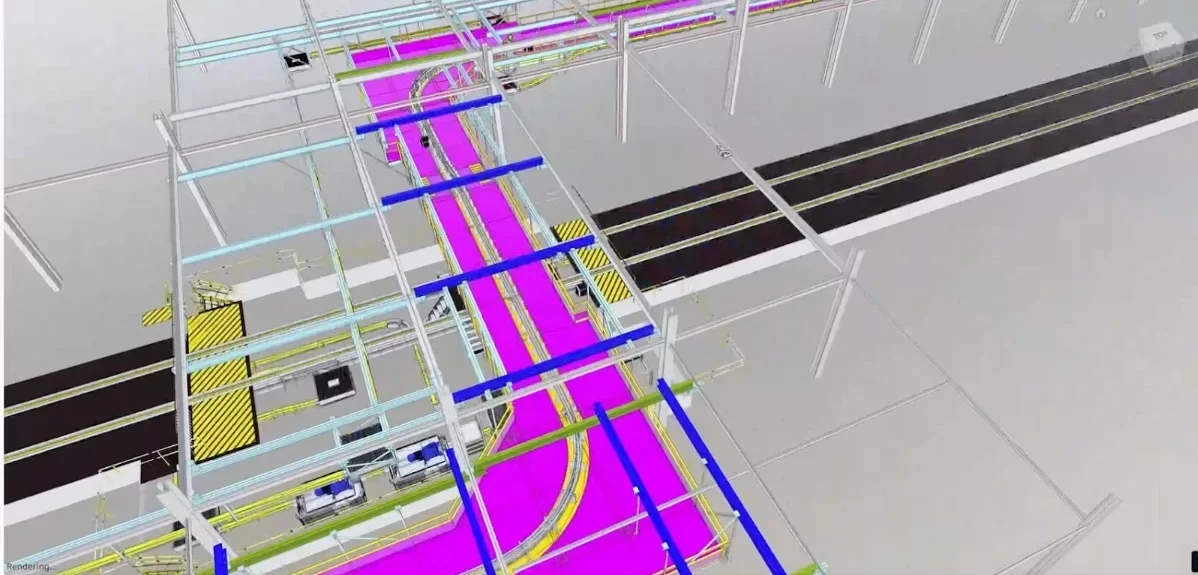
Incorporating software and technologies like BIM, additive manufacturing, and digital twinning during the design phase offers tangible benefits for conveyor systems. From improved efficiency on the line to safer working conditions for employees, embracing the latest innovations helps design systems that perform at higher levels from the moment production begins. Reach out to Sylvan today to see your project brought to life through innovation.
FAQs:
What is conveyor system design in manufacturing environments?
Conveyor system design in manufacturing environments provides the core infrastructure for manufacturing plants to produce, assemble, and distribute products. It requires the arrangement of numerous types of systems, like inverted power and free, overhead power and free, skid, electrified monorail system, tire, and wheel conveyors, in a layout that makes production as efficient, accurate, and safe as possible.
How does BIM improve conveyor system installation accuracy?
BIM serves as a detailed map of the entire conveyor system. It integrates the numerous components from materials to part numbers into one comprehensive location. By displaying all of this information in 3D, both designers and clients can visualize the full system more accurately. They are able to see the big picture of how the parts work together comprehensively, and more easily spot potential issues, while also homing in on smaller details like the placement of safety features like caution areas and platforms. The ability to walk through each specific part and its role in the system before installation begins helps improve both the efficiency and the quality once up and running.
What is a digital twin in conveyor engineering?
Digital twinning takes things a step further by serving as a digital representation of a part, assembly, or full installation layout, allowing designers an interactive view of its entire life cycle. From coding, design, fabrication, and installation, to ultimately usage, digital twinning enables real-time simulation and analysis.
How does 3D printing support conveyor system verification?
3D printing, or the fabrication of a product from a digital design that adds material layer by layer, allows engineers and designers to test the performance of a conveyor system part before it’s installed. Being able to test that a part not only withstands the pressure and load but also performs at the highest level ensures that the system operates more efficiently overall.